Many people assume that command center consoles and monitoring workstations are utilized exclusively within command and surveillance centers; in reality, however, their application scenarios span a wide spectrum of dispatch and control operations—including sectors such as electric power, energy, and smart cities. This article provides a comprehensive overview of the various environments and contexts in which these control consoles and workstations are applicable.
Many people assume that command center consoles and monitoring workstations are utilized solely within dedicated command centers, surveillance rooms, monitoring hubs, or centralized control rooms. In reality, their application scenarios span eight major domains: Public Security & Emergency Response, Power & Energy, Transportation & Rail, Smart Cities, Industrial Facilities, Network & Communications, Campus & Property Management, and Specialized Venues. These consoles serve as the core hardware at the heart of various dispatch and control operations. This article provides a comprehensive summary of the applicable scenarios for control consoles and workstations, serving as a convenient reference for project selection and procurement.
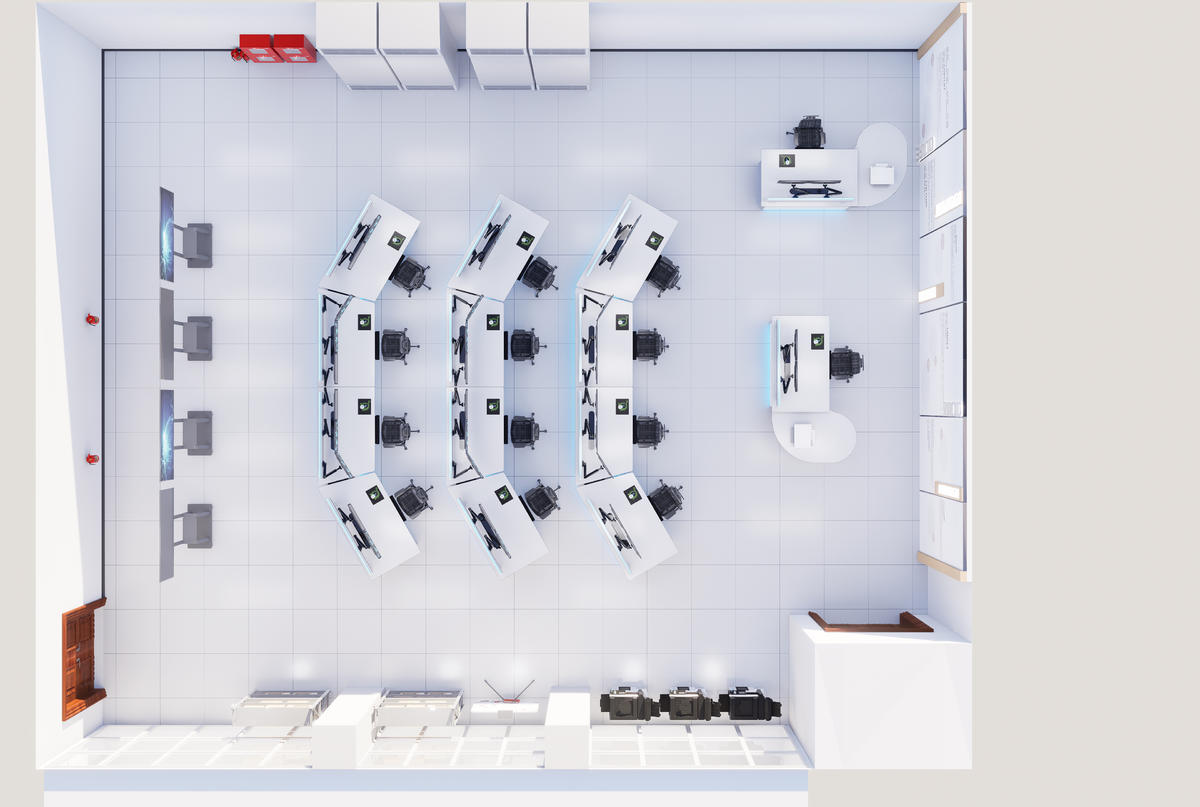 I. Public Security & Emergency Response
Public security and emergency response constitute a core application scenario for control consoles, encompassing emergency command centers, 110 police dispatch centers, 120 emergency medical dispatch centers, and 119 fire command centers. Furthermore, they are widely deployed in grid-based command centers, comprehensive social management centers, joint operations command centers, SWAT duty command rooms, and public security intelligence analysis centers. Professional consoles facilitate multi-screen display capabilities, integrated incident management, and rapid dispatch, thereby effectively enhancing emergency response efficiency and collaborative operational capabilities.
II. Power & EnergyThe power and energy sector imposes extremely stringent requirements on equipment stability and security. Control consoles are frequently utilized in power dispatch centers, power grid monitoring centers, substation main control rooms, power plant centralized control rooms, as well as operation and maintenance monitoring centers for new energy sources such as photovoltaics and wind power. In high-reliability and explosion-proof environments—such as oil and gas pipeline dispatch centers and petrochemical central control rooms—customized consoles enable centralized data monitoring, real-time parameter adjustment, and rapid anomaly alerts, thereby fully safeguarding the safety of production operations.
III. Transportation & Rail TransitTransportation and rail transit systems are critical to urban traffic efficiency. Control consoles are deployed in traffic command centers, road condition monitoring centers, highway surveillance centers, and road network dispatch centers. Furthermore, professional consoles are standard equipment in Metro Operation Control Centers (OCCs), light rail dispatch centers, airport operations control centers, port dispatch centers, and dock control rooms, enabling the unified management of vehicle flow, passenger flow, flight information, and vessel movements to ensure orderly and smooth traffic operations.
IV. Municipal & Smart CitiesWith urban governance at their core, Smart City initiatives utilize control consoles in Smart City Operation Centers and "City Brain" command centers, as well as in water utility dispatch centers, gas supply monitoring centers, and sanitation dispatch centers. In environments such as civil defense command centers and flood control & drought relief command centers, these consoles can integrate data from multiple systems to support comprehensive domain-wide command operations and rapid response to emergencies.
V. Industrial FacilitiesIndustrial facilities focus on production management and control; thus, these consoles are ideally suited for factory central control rooms, production dispatch centers, smart manufacturing control hubs, and assembly line centralized control stations. Mining dispatch centers and industrial park security command centers also require stable and durable operator consoles to facilitate the centralized display of equipment status, production data, and security footage, thereby enhancing management efficiency and safety standards within the facility.
VI. Server Rooms & Network/IT OperationsServer rooms and network/IT environments prioritize network data operations and maintenance. Consequently, these consoles are well-suited for network command centers, network operations monitoring centers, server room surveillance hubs, and big data operations command rooms. Integrated media command centers and broadcasting control centers utilize specialized operator consoles to ensure the stable operation of signal routing, content management, and equipment monitoring, thereby meeting the requirements for continuous, 24/7 manned operations.
VII. Campus, Building, & Property ManagementCampus and property management encompasses a wide range of controlled-access environments. Consoles are utilized in campus command centers, building property management monitoring hubs, school security command centers, and hospital security dispatch centers. In highly sensitive and high-security locations—such as prison command centers and military barracks duty rooms—these operator consoles meet stringent requirements for confidentiality, stability, and durability, enabling efficient, visualized management across the entire domain.
VIII. Other Specialized ApplicationsIn addition to the scenarios mentioned above, consoles are also deployed in meteorological monitoring command centers, environmental monitoring control rooms, event security command centers, and temporary command centers for large-scale events. They feature rapid deployment capabilities and flexible modular assembly, making them perfectly suited to meet the specific requirements of temporary command operations and specialized monitoring tasks.
In summary, command center consoles and monitoring workstations have evolved beyond the limitations of traditional surveillance rooms and centralized control rooms, becoming the standard hardware requirement for command and dispatch operations across virtually every industry and scenario. Depending on specific industry characteristics, the number of required workstations, and functional demands, users can select from linear, curved, or fully customized console configurations to create a highly efficient, stable, and professional command and control environment.

